Crystal Coast of North Carolina Mesh Network
MeshCore is a LoRa-based mesh networking protocol designed for low power, off-the-grid text communication, allowing devices to form self-organizing networks without relying on cellular networks. It enables messages to be relayed across multiple nodes, emphasizing structured routing and energy efficiency.
MeshCore is a recent open-source project focused on LoRa mesh networking, launched in early 2025 as an alternative to Meshtastic. Like Meshtastic, MeshCore enables off-grid text messaging and data sharing over long-range LoRa radios without any internet or cell towers.
However, MeshCore takes a different approach: it was designed from scratch to be a lightweight, scalable mesh system with more structured routing and control. The goal is to support larger and more efficient networks by making the mesh itself smarter and more organized, rather than relying on all nodes flooding messages.
MeshCore does not have every device blindly repeat messages. Instead, it introduces the concept of dedicated repeaters and end devices. A typical MeshCore network has a few infrastructure nodes (repeaters) placed in strategic locations, and the regular user devices (companions) connect through those repeaters. Companion nodes do not rebroadcast every message they hear - they leave that job to the designated repeater nodes.
When you send a message on MeshCore, it typically goes from your device to a repeater, then maybe to another repeater, and so on, until it reaches a repeater near the destination, which then delivers it to the recipient's device. Think of the repeaters as a backbone or "postal route" for messages.
MeshCore nodes actually learn routes: the first time a message to a new destination is sent, it may flood minimally to discover a path, and then that path is used for subsequent messages. This makes MeshCore stateful - nodes keep tables of which neighbor leads to which part of the network.
By not having every node repeat everything, MeshCore greatly cuts down on background "chatter." A repeater might send an occasional brief advertisement so companions know it's there, but these are infrequent. This lean communication means the radio channel stays clearer for actual messages, leading to faster and more reliable message delivery as the network grows.
MeshCore runs on similar devices as Meshtastic - Heltec WiFi LoRa, RAK Wireless modules, LILYGO T-Beam and T-Echo, the T-Deck, and more. If you have a device that works for Meshtastic, it can likely be flashed with MeshCore firmware too.
MeshCore's team provides a web-based Flasher Tool that makes it easy to select your board model and flash the appropriate firmware. The MeshCore firmware itself is open-source (MIT License) and is built as a modular C++ library.
The MeshCore mobile app (Android/iOS) is free to download and use. Premium repeater control features are available for a one-time $7.99 upgrade, or you can wait 10 seconds to use premium features for free. The app lets you see network topology, delivery confirmations, and even set specific routes for messages.
Covering an entire town or city with LoRa mesh messaging. Set up repeaters on rooftops and hills to create a backbone.
Connecting lots of sensors on a farm, factory, or large property where efficiency matters.
Emergency operations where knowing for sure if a message got through is essential.
Those who love to tinker and want more control over network behavior and routing.
Track reported public coordinator nodes, telemetry signals, and active baseline line-of-sight tracking data vectors.
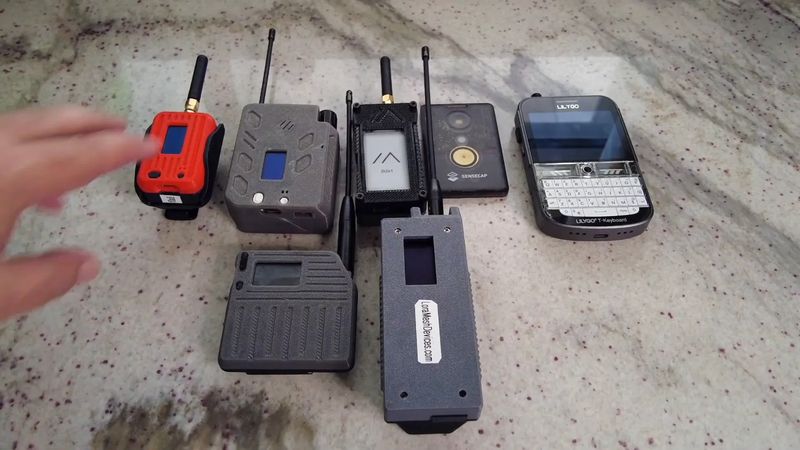
Your everyday pocket companion hardware—LILYGO T-Deck handheld keyboard devices or like the LILYGO T-Echo or T1000-E—paired via BLUETOOTH. These modules handle messaging, receive local mapping coordinates, and transmit user text strings directly out into the immediate over-the-air workspace, acting as the end user. Click to see examples.
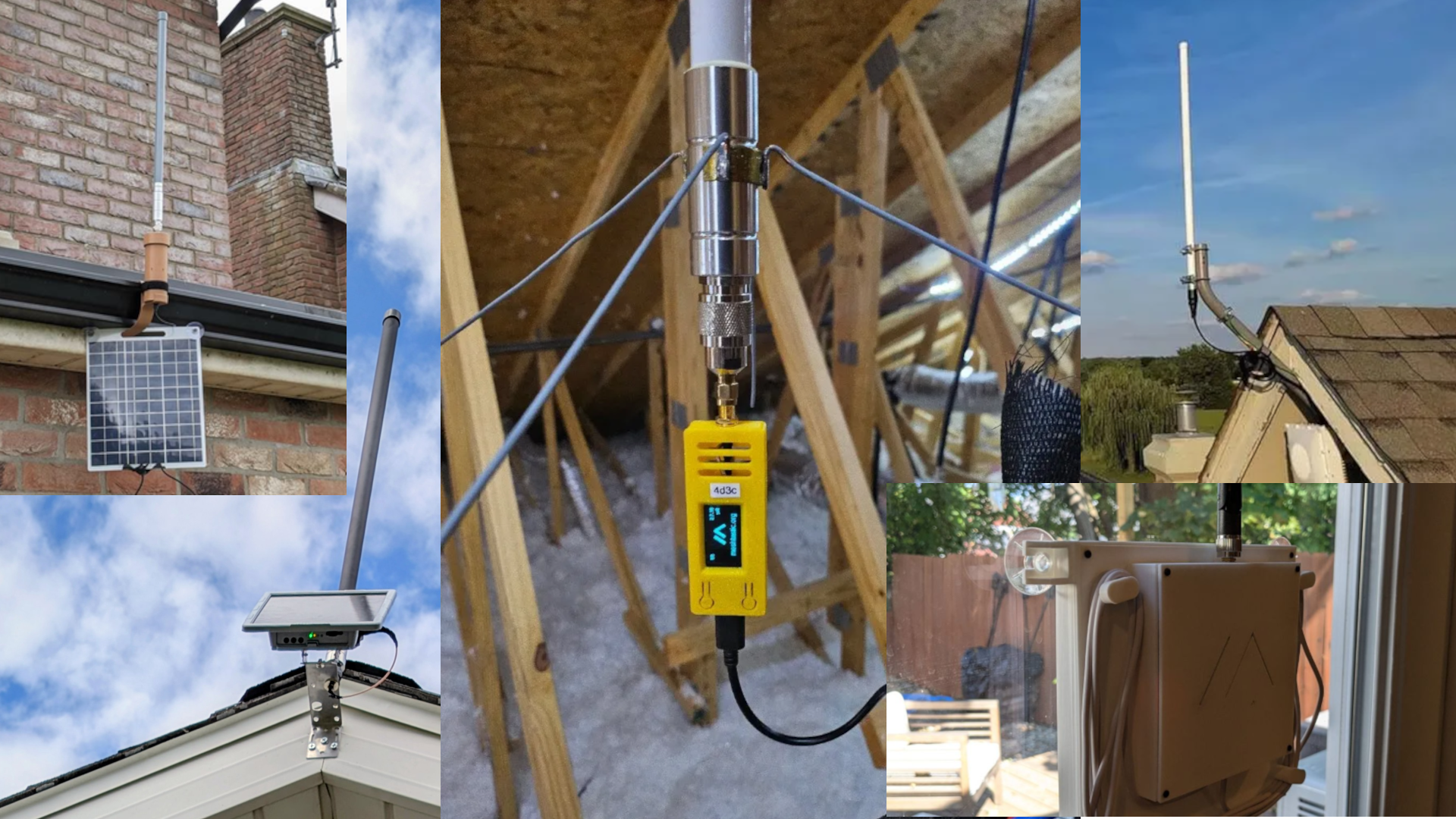
Click for infoStandard repeater configured devices used for small neighborhood meshes placed in clear points like a second-floor window, attic space, or standard roof ridge. Flashed with the standard REPEATER firmware, they participate fully in the calculated routing steps to extend range across local residential areas to larger regional meshes. Click to see examples.
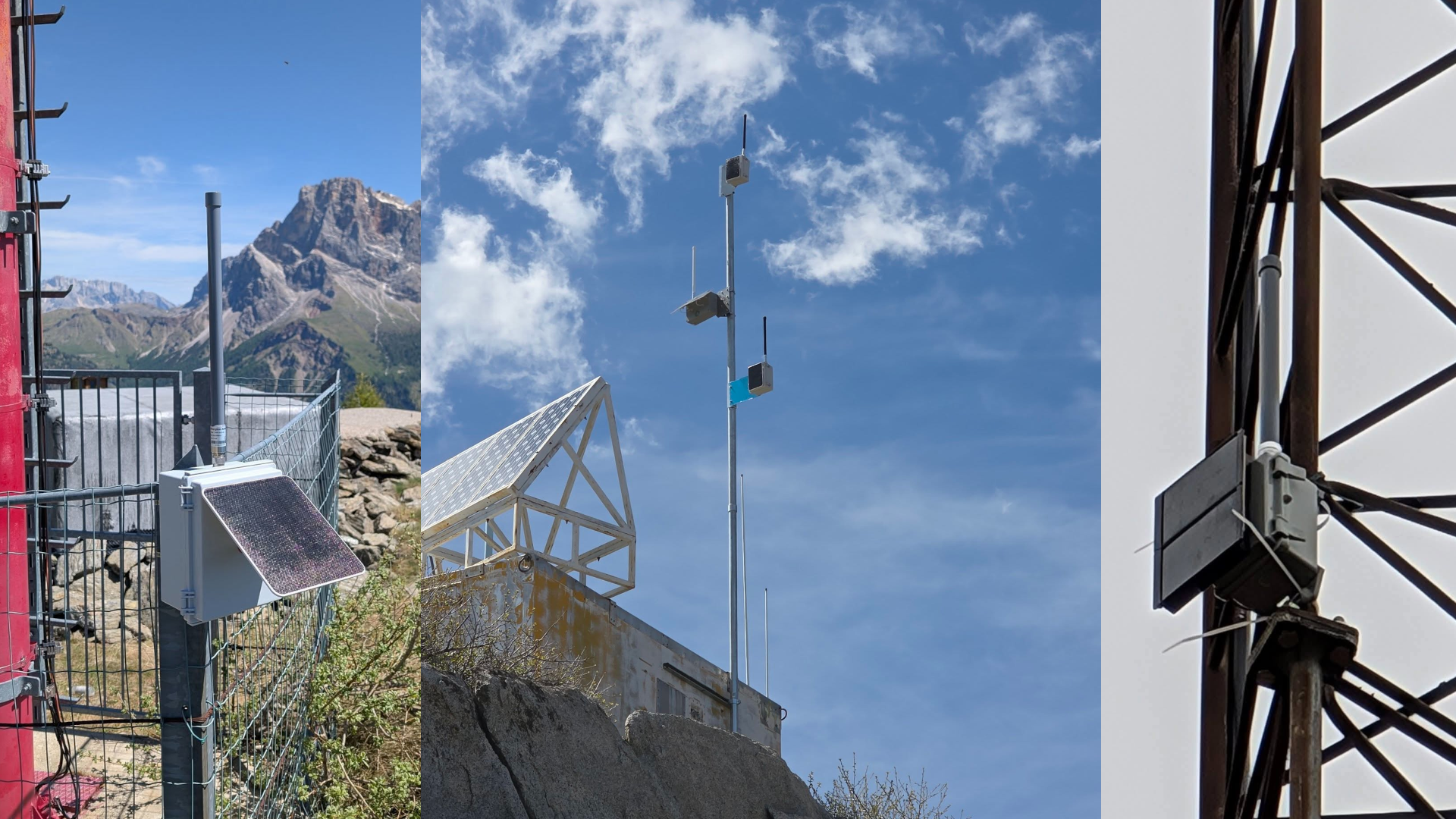
Click for infoStandard repeater configured devices used for linking smaller meshes together or creating regional meshes placed on high multi story buildings or tall towers or mountain tops. Flashed with the standard REPEATER firmware, they participate as links or backbones to connect smaller meshes into a fully regional, large coverage area mesh, connecting with the rest of the state or into other states. Click to see examples.
Click for infoStores messages when recipients are offline and forwards them when they return. Can be co-located with a repeater or can be stand-alone. Room Nodes will be tagged as a REPEATER in the CONTACTS list.
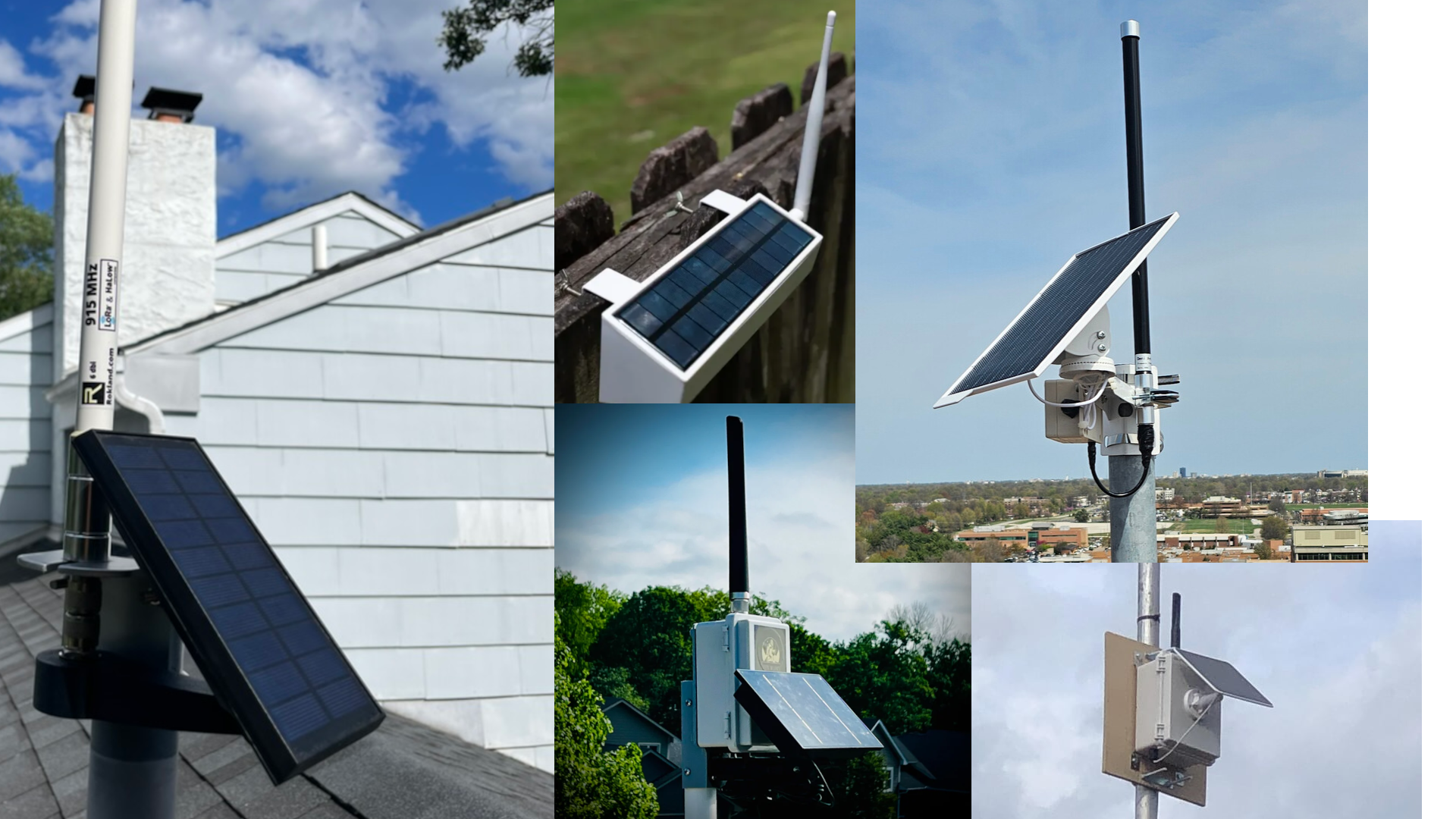
Click for infoRuggedized, weatherproof outdoor boxes combining low-power components (like RAK WisBlock or Seeed Studios XIAO or Heltec modules) with LiFePO4 Batteries and solar panels. These modules sit completely independent of conventional electrical power to preserve or extend the mesh where conventional power is unavailable, such as on a roof or tower or beach or island or mountain top or remote field or any other off-grid location, ensuring continuous network coverage and reliability. Click to see examples.
Click for info